Happy New Year 2012

January 3rd, 2012

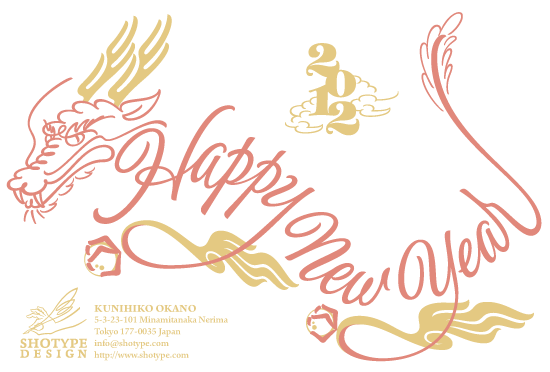
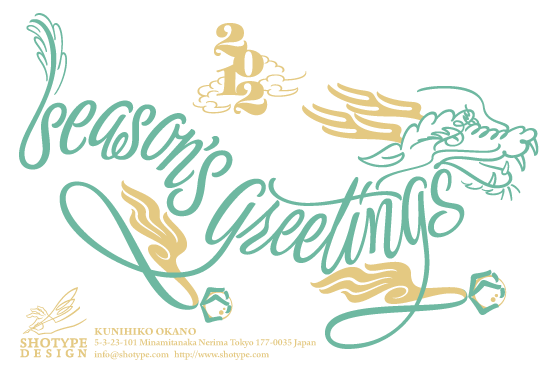
Happy New Year 2012! Here are my New Year’s card designs for 2012. Which did you get? 2012 is Dragon’s year in Japan. Unfortunately I couldn’t send any New Year’s card last year since I was in the Netherlands and very busy working on the assignments of TypeMedia, so I’m glad I would be able to send it again in this year.

I will turn 41 in May (hard to believe), so I’m plunging into a year called Yakudoshi in Japanese, which is believed that men turning 41 are likely to get an illness or misfortunes. So I got a special amulet to protect from misfortunes, but I don’t want to be afraid of plunging into Yakudoshi! I’m very excited.

Quintet has been released on Photo-Lettering

December 24th, 2011

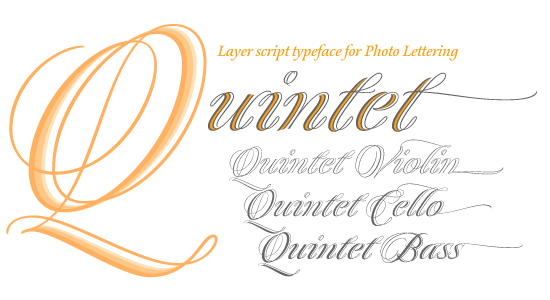
I’m very happy to announce that my own first retail typeface Quintet Script joins Photo-lettering Collection running by House Industries. This typeface was initially made for the Typeradio workshop, titled “Typographic Chinese Whispers” and was held in Feb. 2011, and restarted as the final project of TypeMedia 2010/2011 class at KABK in the Hague, the Netherlands. Quintet for Photo-lettering consists of a combination two exclusive weights (Violin and Cello) and one most heavier weight from the regular family to go well with Photo-lettering’s unique outline download service.

I hope you enjoy this typeface for your graphic, packaging or greeting card project. Its three layers create many colorful combinations or unique arrangement by applying emboss effect or metallic color or gilding to one of three layers. It must be also nice for a screen media such as a titling of video clips or web contents. You can get a lively titling image by applying animation effect to a stroke which looks like a double-stroke but consists of a single-stroke.

I also would like to release original five-layer design as an OpenType font, and now I’m preparing for releasing it but no schedule has been decided. If I’ve got a clear schedule or plan, I’ll disclose it here.

The reserch presentation on the Asahi Shinbun typeface.

December 8th, 2011

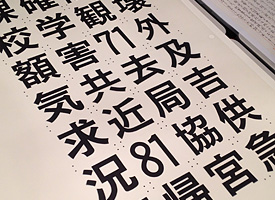
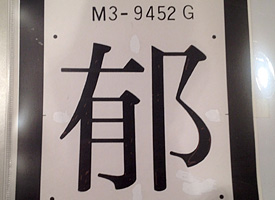
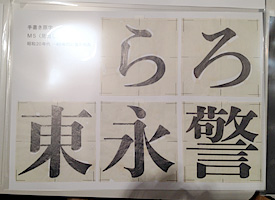
TOKYO — The presentation on the research for the Asahi Shinbun Typeface was provided by Akiko Nakai, assistant manager of the font division of Asahi Shinbun Co., at BIZ Shinjuku, Tokyo on December 8th. The Asahi Shinbun is the one of major newspapers in Japan and published the first issue in 1888 in Osaka then now became the second largest newspaper company. Nakai joined the font division about two years ago and attended Shinjuku Shijuku: 新宿私塾, literally means the Shinjuku private school and provides one year typography program organized by Robundo, is known as a publisher featuring typography, to get knowledge and skills on typography. The report was compiled as a final project of the curriculum. The presentation was provided not only by a slide show report but also a lot of physical stuffs from letterpress to digital Asahi used. They included many draft sketches and the Kanji letter press pieces which have ruby, called Furigana, is a Japanese reading aid Kana characters along with the Kanji for indicating its pronunciation. Besides that, the stuffs marked “confidential stuffs” were also included and Nakai told that it must be rare opportunity to show them since we never took place like this exhibition.

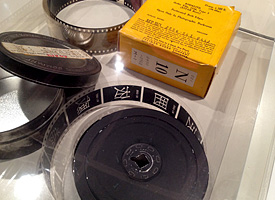
Left: Draft drawing. Right: 35mm film for archive. Asahi sent them to IBM to digitize

Nakai explained in her presentation about the history of the Asahi Shinbun Typeface and showed many photos of the workplace to make the typeface. In the earliest time, Asahi bought typefaces from some Japanese type foundries such as Tsukiji Katsuji or Motoya Matrice, but after the WWII, as the amount of the publish was getting increase, Asahi decided to make an original exclusive typeface.

One of the interesting background stories in the design history was why they started making vertical compressed letters, now is known as a newspaper style typeface in Japan. As the possibilities going to World War II were getting higher, paper supply and quality went worse. Asahi decided to reduce the amount of the page per an issue and they made a small typeface, 6.286pt, to have an equivalent information. But the complaint that the typeface looks too small arose not only inside the company but also from the readers, besides that, the government also required that the newspaper letters should be lager to protect the readers eyes. To solve this problem, the staff considered that the letters should be as large as possible without changing the amount of the information. Unlike Latin language newspapers, Japanese newspapers set text vertically. The staffs came up with the only solution to make the letters larger without changing the text length must be expanding letters horizontally. Considering that the eyes of the human being are on the face horizontally, an expanded typeface could have readability for readers. Since the Asahi Shinbun started using newspaper style expanded typeface, the rest companies followed to use it, and now vertical compressed Mincho style is regarded as a Newspaper style typeface.

Left: Draft drawing of Mincho style. Right: Draft drawing of Mincho Titling style.

Asahi repeated to make the letters larger several times and brushed up them as the typeface has been changed along with the transition of the mechanical three main methods from letterpress to digital.

The report was well compiled as an company history featuring its typeface, but I was a little bit disappointed that it didn’t deal with the detail of the design transition so much. Nakai showed some references using some Kanji letters, for instance “朝” that is the initial kanji letter of the Asahi Shinbun, but I wanted to know how the Kana design transition had been made and the what the future typeface design will look like to fit the screen media as the Asahi Shinbun eager to make web site and smart phone applications to provide its issues.

Some of attendees who I met after the show told me that it was very good presentation, which was interesting. They seemed to be satisfied that the presentation. But I doubt it.

Asahi Shinbun typeface must have an equivalent design history to the Shueitai typeface, which is the one of main stream design typeface in Japan and turned centennial last year. The exhibition to cerebrate the centennial of Shueitai showed the long history and tremendous important stuffs. I’m sure Asahi also has the equivalent stuffs like Shueitai has. I hope they will publish the book on the Asahi typeface and provide more detail information in public.

Pre event talk show for Zapf Exhibition.

September 11th, 2011

The 6th Type Talks featured the Zapf Exhibition “Hermann Zapf & Gudrun Zapf, the World of Calligraphy” form 13th Sept. 2011 in Tokyo organized by Akira Kobayashi and Japan Letter Arts Forum (J-LAF), which includes some Calligraphy works and type design works. About 80 attendees were gathering to the ABC Aoyama Book Center and enjoyed interesting topics related to the Zapf’s works.

Minako Sando, is a calligrapher and representative of J-LAF, and Yukie Hoshi, is also a calligrapher and core member of J-LAF, explained the background stories of the preparation for the show and the visit to Zapfs’ house in last January to pick up their works. They talked about the meeting with prof. Hermann Zapf and Gudrun Zapf von Hesse with some interesting photos and the selection in their archive rooms. And then, explained some high lights of the works in the exhibition. She analyzed the letter forms and techniques in the works one by one from the Calligrapher’s point of view and explained the difference between letter forms focusing on the lowercase “d” in the Hermann work Quotation by Walter Crane. It has almost 30 variations “d” like the long ascender and the alternative letter form which has a curly ascender stroke. One of the examples showed the terminal of the loop ascender stroke looks continues to the following letter e and r. She guessed the order of the strokes if the e was written after the r or the stroke just looks connecting to the r. (Oh, hard to explain without the image!)

A Calligrapher and type designer Ryuichi Tateno, is a designer of Pirouette and Stevens Titling from Linotype, explained and demonstrated the Zapf’s techniques, a so called piano technique (means pen pressure transition during drawing the terminals of a stroke) and drawing strokes which was introduced in the book Creative Calligraphy published by Rotring in 1985, and the famous short movie The Art of Hermann Zapf by Hallmark cards.

And at last, Akira Kobayashi joined the talk via Skype from Bad Homburg, Germany, and talked about the high lights of the type design works by Zapfs, mainly the collaboration works with Zapfs, such Diotima and Optima Nova.
He mentioned about the design transition of the lowercase “g” of Diotima in developing phase for the metal type to the digital revival Diotima Classic. He happened to find a document file of Diotima in the Linotype archive room while he was preparing for the Helvetica exhibition in 2009. He realized the lowercase g had been changed several times during the developing process for about few years. And it continued in the collaboration works of Diotima Classic with Gudrun. Almost of the works he introduced in the talk show will be displayed in the exhibition. I learned a lot of high-lights of the works today, which must be helpful to admire the exhibition works.

In fact, Minako and Yukie came by to see me in the Hague during visiting to the Zapfs’ house as I was joining TypeMedia KABK. I was very glad that they somehow took a time and came to the Hague even though they were supposed to be busy preparing for the meeting and had to back to Darmstadt right away. They told me about the visit but seemed to be nervous to see Zapfs because Akira Kobayashi couldn’t join the meeting due to a cold even though they expected he introduced them to Zapfs. I just made a wish everything would go well and I was very glad again to hear yesterday that everything went well and they got a great experience with Zapfs.

I’m the one of big fans of Hermann Zapf, so I’m looking forward to the show. I’ve never seen of their works firsthand, so it must be a rare chance to take a close look at them. I have some Hermann Zapf’s books but I can tell the differences between the original and the picture. I wish I can steal their techniques;-)

The exhibition was planned in last March, but it had to be rescheduled in September because of the Higashinihon earthquake (the Great East Japan Earthquake on March 11). The show starts on 13th Sept. until 25th at le bain in Nishiazabu, Minato Ward, Tokyo, Admission 1,000 yen. It includes more than 50 pieces, Handwriting, Replica, Materials for font development, Metal typesetting, etc. A special program is also scheduled to show the DVD movie “The Art of Hermann Zapf” produced by Hallmark Cards Inc. on 18th and 25th Sunday 13:00 / 15:00 (twice a day). This show is highly recommended and don’t miss it.

AXIS Latin Pro won a Good Design Award

October 1st, 2010

AXIS Font Latin Pro won a Good Design Award 2010. The design farm of this font, Type Project won the Good Design Award straight three years since AXIS Compact series got it in 2008. Driver’s Font, which was collaborated with Denso, also got it last year.
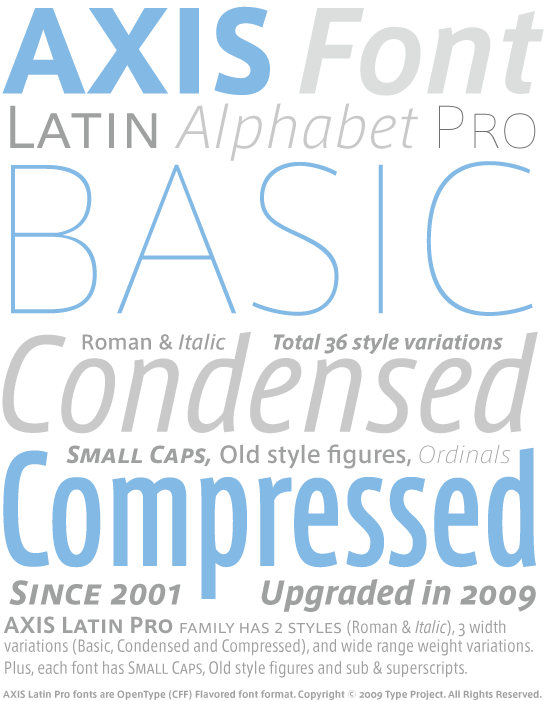
AXIS Latin Pro is the basically developed for Japanese font named AXIS Font in 2001 as a Latin portion. AXIS Font was designed by Isao Suzuki of Type Project. Suzuki was a former type designer of Adobe Japan and joined the design team that developed Kozuka family. He started AXIS Font project in 1998 for an exclusive font for AXIS magazine, is one of famous design magazines in Japan and mainly features architect, product and industry design. After he left Adobe Japan, he concentrated to make AXIS Font. After a while he started this project, he asked Akira Kobayashi, is now a type director of Linotype, to make Latin parts for this font. They developed this family, contains seven weights, for about three years, AXIS magazine started using this font when the magazine turned 20th anniversary and renovated its design format in 2001.

After AXIS magazine used it exclusively for about one and half years, AXIS Font was released in public in September 2003. It was widely used in several kinds of design field or a corporate use because of its high design quality. Apple Japan (Japanese character only), Mazda, Nintendo and some other major worldwide companies use AXIS Font for their corporate or branding images.

After AXIS Compact series released in 2008, AXIS Latin Pro was planed since the needs for multi language text setting are getting increase and widely required for the company and design farm which need to have communicate with customers and users across world.

After Akira Kobayashi left for Germany to join Linotype in 2003, Suzuki was looking for a new type designer who would be able to make Latin parts, then Kunihiko Okano joined Type Project in 2005 to make Latin part of AXIS Compact series, then continued to make AXIS Latin Pro family. After Okano left type Project in the end of 2007 and he started his design office called Shotype Design, he keep continue to make them and finally released in September 2009. To release this font as a Pro version, Okano developed Italic style, small caps, old style figures and specific characters, and compiled 36 styles, Roman & Italic, seven weights(UL, EL, L, R, M, B, H), three width variations (Basic, Condensed and Compressed), which create richly expressions and fulfill versatile typographic demands. Besides, more over than 700 characters supports 41 Latin alphabet languages across the world, so you can use them for the items, applications and medias which are available to use all over the world. This is the rare case, might be the first case, that the Latin part of the Japanese font released independently as a retail font.

AXIS Font exclusive dealer www.axisfont.com

Type Project: AXIS Font developer.

AXIS and AXIS Font are the trademarks of AXIS Inc.
Type & Media 2010/2011 at KABK

September 19th, 2010

I joined the Typemedia course at KABK (Koninklijke Academie van Bleedende Kunsten, Den Haag). I’m really happy to spend for about one year with these great guys. This is the first 2010/2011 class shot in the type park at Meermanno museum nearby KABK.

Left to right:
Florian Schick, Lauri Toikka, Sun Jung Hwang, Alpkan Kirayoglu, Linda Hintz, Colin M. Ford, Malte Herok, Kunihiko Okano (Me), Jan (“Yanone”) Gerner, Emma Laiho, Marina Chaccur, Yassin Baggar

Hiragino family joins the Morisawa Passport program

September 10th, 2010

I’ve got surprised news that Dainippon Screen Inc. announced that Hiragino font family, which is known as a Japanese font family bundled on MacOSX, will join the Morisawa passport program in the next update version in Autumn 2010. Not only Hiragino KakuGothic (Sans Serif), Mincho, MaruGothic (Round serif), also Yutsuki Kana series, Hiragino UD family, is a spin-offed version of Hiragino, will be bundled on the kit.

I was very surprised that news because Dainippon screen must be the last competitor to defeat Morisawa. The design quality of Hiragino products is brilliant, and Hiragino is bundled on Mac OSX and it generates much revenue to the company. So I believe there’s no worry that Dainippon Screen don’t have to use an annual license program although its variety of the fonts are less than the ones of Morisawa. Honestly speaking, I was a little bit disappointed that Dainippon Screen made a decision to join Marisawa program because every font maker should provide its products by itself. Besides, Morisawa is a competitor. I couldn’t believe Hiragino would join the rival program.

Most of Japanese major foundries recently started providing an annual font license program since Fontworks started Lets Program in 2004 for the first case in Japan. Morisawa followed to start the similar annual license program called Morisawa Passport in 2007, which has been welcomed by users and designers and getting increase its sales year by year. Then the other foundries, Iwata, TypeBank and Motoya started Lets program, and finally Dynacomware announced to start providing an annual license program called DynaSmart in the earlier this year. The reason why most of Japanese foundries plunged into the annual license program market, I guess the users seem to think it is very affordable and useful for getting several kind of typefaces at once despite paying the license fee every year. As you may know, typical Japanese typeface is very expensive compared with the Latin alphabet typefaces. It costs at least 10,000 per style, for example, the latest Morisawa passport contains more than 500 style typefaces and covers several kind of styles such as text, display, fancy, traditional and modern feelings, which is as much as a few million yen. Graphic designers must be happy to have them, then will be free from annoying consideration to buy new typefaces or asking their supervisor to get permission purchasing it.

I have to say the annual license program is very useful and helpful for users. From the point of type designers’ view, however, the royalty per typeface will be getting decrease as the contents is getting increase in the passport library. Do you think it must be a good business model for type designers? I doubt it. If Morisawa would not replace the contents along with the users’ demand or allow users choice the limited numbers of favorite fonts, the business model might be going to get the worse result at some point.

The last letter engraver Kinnosuke Shimizu.

January 11th, 2010

The type event in 2010 started with the letter engraving demonstration at the Ota Bunka no Mori, in Ota Ward, Tokyo. An engraver craftsman Kinnosuke Shimizu, who turned 88 years old on that day, is one of the last letter original engraver craftsman in Japan.

Left: Ota Bunka no Mori center in Ota Ward where the demonstration event was held. Right: Attendees were gathering around Shimizu’s table.

When I entered the room, he already started cutting letters sitting on the floor in front of a wooden work table. A bunch of attendees were gathering and crowded around his table. A desk lamp illuminated his fingers, but it is hard to see how he cut the letter because the metal stick he was going on was very small. Sometime, the stick he picked was shining in his fingers. Using an old loupe, Shimizu gazed at the stick. He sometime rotated it, and the tiny chisel was slightly moving on the top of the stick. He showed superb technique and made letters slowly one by one. He seemed to be very fine. It was hard to believe he turned 88 years old today.

Left: Shimizu was sitting on the floor toward his work table. Right: Shimizu explained how to curve letters to attendees.

While he concentrated cutting letters, often said that “Let me know if you have a question, I can answer them working on demonstration.” So I hesitantly asked him some questions.

According to him, he started cutting letters when he was 14. He worked hard all the day, it took about five years to cut letters well. The workshop he joined had five craftsmen, included him but it had few dozens craftsmen at peak, which produced about fifty letters per day.

I expected cutting tiny letters such a ruby, so called Rubi in Japanese and is used for a furigana superscripts, takes a longer time than larger ones such Shogo 初号. But he told me that “Cutting smaller letters are easy. Rather, large size letters need to take a time. They require accurate quality, so, it took much care for cutting them. While cutting average small letters takes about a twenty minutes, but average large size letters such Shogo take a few hours. Of course it depends on its size and complexity.”

Left top: He gazed at the stick through the loupe. Right top: A tiny stick he picked was shining in his fingers. “Cutting reversed letters is easier than writing normal letters. I can’t write normal letters well,” he said with a smile.

“Do you have any pupil or is there any followers to try to make it?” I asked. Then “No, there’s no demand for engraving letters at all, but I can teach you if you want,” he answered with a smile. “Because of appearing new technology, (might be the Benton cutting machine and a photo type setting technology) most of punch cutters had to retire, then he left the job about fifty years ago. After some decades passed, however, some type designer asked me to demonstrate cutting letters at the letter press event. At first, I denied because I forgot, plus I no longer had tools for that. But my wife still had all of them. So, I tried to do that, then I could,” he explained.

“I would like to say thank all of you guys. Thanks to everyone’s help, I have been a craftsman for a long tome and am able to show this demonstration today. It was a pity when I lost a job because of new technology, but I’m happy I can show you guys cutting letters due to all of your interests,” he added.


Left top: A T-formed loupe stand he customized. Right top: Hold a letter stick like this. Left bottom: Left hand which holds a letter stick is set on the end of the horizontal bar, and right hand which grabs a chisel is put on the right side. Right bottom: An enlarged letter stick reads 鶴龜 pronounce Tsuru Kame, means crane and turtle, which are the symbol to bring happiness. 鶴 has 21 strokes, and 龜 has 16 strokes within about 5mm square each.

Left: A grind stone, Right: All chisels he uses are made by himself. He customized them to fit his hand and fingers. Meanwhile, counterpunches are used in making Latin alphabet punches, Shimizu grave letters without any counterpunch. Almost of Kanji letters have many complicated crossing strokes, which create thousand kinds of counter shapes. That’s why, making counter punches to fit all kind of counter shapes is not economic way at all.

When we are talking about a font regardless of digital or letterpress, we tend to focus on type design or typography, which is to say what we can see only. However, the fonts we have now and letterpress on an old book were provided by the collaboration between designers and engineers or craftsman like Shimizu. Without craftsman/engineer’s skills and big efforts to making fonts, these are never provided to users. When we get a font, I think we have to imagine not only designers but also craftsmen and engineers who had worked hard to make it.


Left top: Shogo 初号, engraved directly by Shimizu. Right top:Original letters made by Shimizu were displayed at the corner in the room. Visitors were able to see the superb skills Shimizu had. Letters were shining and glaring and had sharp edge. Left bottom: He prepared these letters for this event. Right bottom: Rubi letters. Katakana letter within 2mm square.

As I mentioned above, it was the Shimizu’s 88th birthday. After the demonstration event, the birthday party celebrates his Beiju “米寿, 米 consists Kanji numeral 八十八, reads eighty-eight, and 寿 means celebration” was held nearby the event place. That’s too bad, I couldn’t join the party, but I was sure the party must be exciting. I hope to see his demonstrations again. Congratulations, Mr. Kinnosuke Shimizu.

Gratitude:
To know some terms for letterpress and electrotype, I asked typophilers about them here. I would like to say thank to those who helped me out.

The Tiger year 2010.

January 5th, 2010

2010 has come. In Japan, we generally exchange a New year’s card with friends, colleagues and relatives instead of a Christmas card. Here is my card. When we design a new year card, we use an image of animal to express new year, which is called Eto 干支. From mouse to wild boar, twelve kinds of animals are the members of Eto, which is also known for the Japanese ancient counting way not only years but also the day and time by using these twelve animals, which revolve every year one by one like Duodecimal. Tiger “寅:tora” is the symbol for 2010.

Left: My new year card in 2010. Right: I bought a white arrow when I went to first visit to Tomioka Hachiman Shrine. And a lovely tiger ceramic bell my brother gave me.

The later part of last year, I couldn’t provide any articles to update my blog. I don’t want to excuse it was because of the hard schedule. But as I concentrated on the type design project I joined, so some type design works were available by the end of last year.

Thanks to the people who interested in this blog, I could get some comments and email last year, which encouraged me a lot, and I found those who are interested in Japanese font and type design all over the worltd. I was glad to hear from all of them. I’m sure I’ll post topics related to Japanese type design and typography in 2010. I wish we meet again and hope to get your interests to this site. Thanks.

Automotive Designers’ Night Tokyo

October 21st, 2009

A bunch of designers were coming to Automotive Designer’s Night Tokyo which was held at AXIS gallery, in Roppongi, Tokyo, titled Kurumaza 車座, literary means sitting in a circle, 車 means car in Japanese, as a pre-event of Tokyo Motor Show 2009. The room was packed and loud, so it was hard to catch what neighbors are saying. Attendees might discuss and talked about something hot topic related to car vehicles or ecology issues. The medias reported the Tokyo Motor Show was shrinking because of the withdrawal of Euro and US car makers, but the room was warming up and seemed to be no sign of descending car market but filled with emotions to the future.

The sponsor companies showed its products there, Denso previewed Good Design Award 2009 Frontier Design Award Winner Driver’s font and provided the series of business card-sized papers to applicants. They could get the cards with their name printed by Driver’s font. It contained 4 cards, 3 styles of Driver’s font, Driving, Neutral and Sports Mode, plus a serial number card. There seem to be a lot of hurdles in order that Driver’s font will be available in automotive instruments, but I hope the fonts will be welcomed by car makers.

The series of cards provided by Denso at Automotive Designer’s Night Tokyo.

Tokyo Motor Show 2009 will be held from October 23rd through November 4th.